Scoping Cybernomos: TOKII
audio here
Symbolic Metaphorical Figure
The least demanding and simplest to endorse, implement of these propositions, and the beginning of my agnostic insights garnered by the focus on monotheism, is the prospect of mobilizing a symbolic metaphorical—visual—figure. One that encapsulates for humanity something of both the dangers, as well as the promise, of aligning AI to the future prospects of our evolving human condition; and all else of Life that we currently purport to take responsibility for. The TOKII figure connotes what is fundamentally morally neutral, implicitly-intrinsically ironic, about the relationship that mankind has with the notion of knowledge. In particular, the tendentious assumption, that advanced technology will automatically advance the human condition to something that can be universally agreed upon as progress.
TOKII can be thought of as something as prosaic as a logo, an icon; or something much like the international sign used to represent atomic energy; or even the hinging visual loci of a hopeful, informed, educational agenda. Or, as it has been deployed here, as a critical philosophical window, a visual prompt signifying a more strident examination of ideas relating to the governance of, and with, computational intelligence. There’s a virtue in thinking visually, both in terms of holding that thought, and for strategic communication. That is the establishment of a reference point, a sense of something understood: a visual figure that encompasses—represents the profound ambiguity with which the Janus-faced capacity of our technological advancement can be truly considered, held to account, and ultimately benefited from.
The title of all nine compositions is Larousequations ~ The Index, and can be accessed here.
Genesis
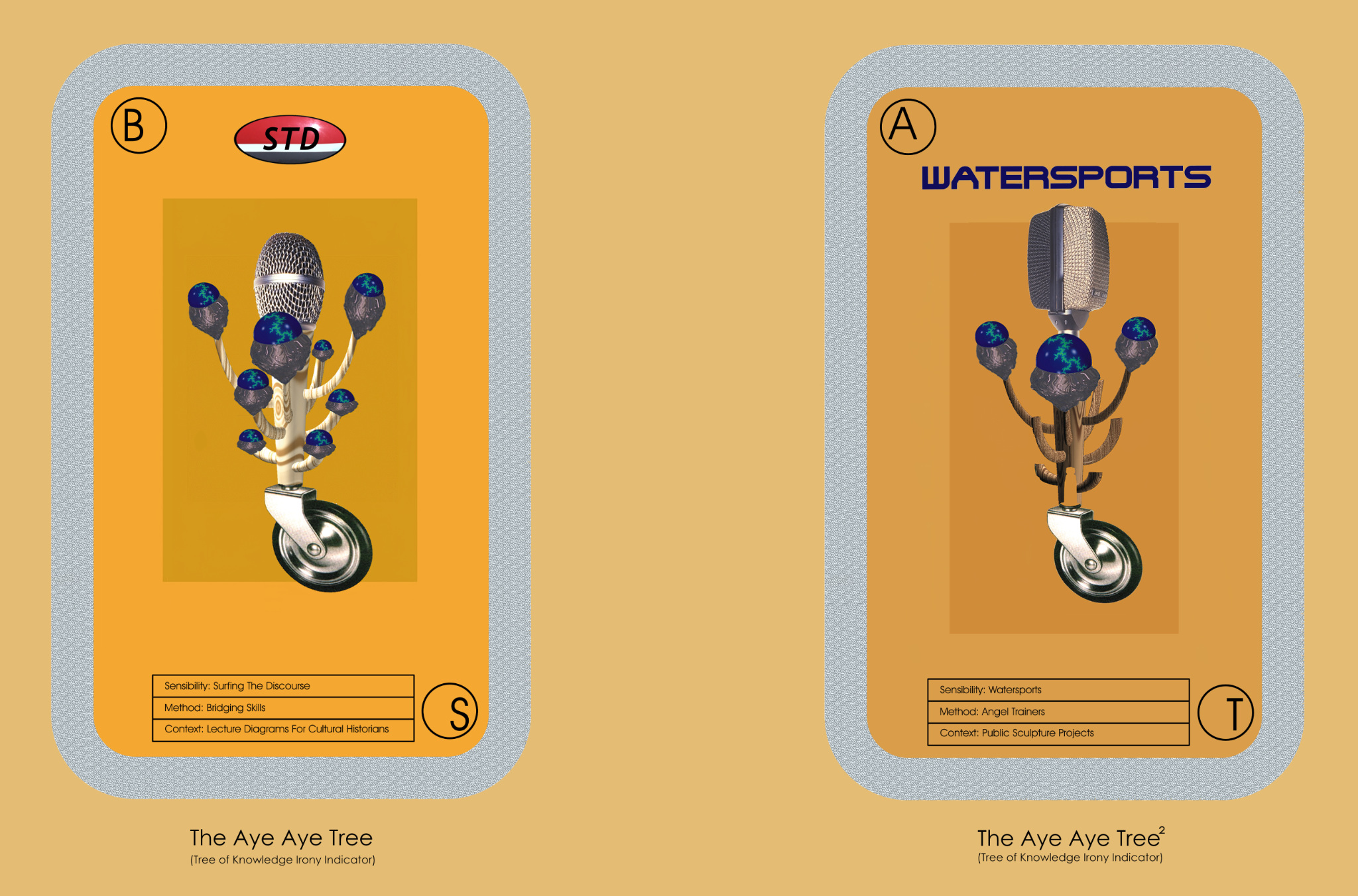
The genesis of TOKII, of how this symbolic metaphorical figure, as a visual sign came to be, was initially, and remains closely associated with thinking about, the notion of governance. The essential concern on a master’s degree in Image & Communication was how to create visual metaphors that could explore and embody certain interrelated sensibilities. I entitled two of these visual figures the Tree of Knowledge Irony Indicator (see above), largely because I was thinking about the existential problem—relating to self-governance—of how is it even reasonable to take responsibility for oneself, if interpellated into a subject position that already imposes-defines the parameters of what’s deemed to be possible. Such as our gender identity for instance. And, acknowledging marked problems in exercising free will in response to this, registering the ironic disposition gained in understanding that the pursuance of such difference, involving a certain possessive individualism, might well not be in one’s best self-interest.
Yet we are intrigued, even compelled with exploring such difference. That is, as is the case with our intellectual curiosity now posed by the promise and potential perils of AI, this unending inquisitiveness presents as a philosophical problem: the compulsion to test boundaries, to act ostensibly in ways that from the outset look both promising, yet court-risk the averse. That can leave us thoroughly compromised and vulnerable. The enigmatic problem of deciding exactly how to act in our best self-interests, when all is fluid, mutable, convulsively interesting, alive. This is the province of TOKII, the domain of the Tree of Knowledge Irony Indicator.
Irony
TOKII, in its original formulation, was not concerned with your typical ironic trope of distancing yourself from someone or something by inferring the counter, essentially stating one thing but meaning the opposite. No, this relationship between knowledge and the cultivation of an ironic sensibility was more paradoxical in nature. Typically involving facing up to a thoroughly determined situation, acknowledging that your options are limited; thereby, at least to some extent, by articulating the predicament, gaining a certain conceptual freedom in the process. Patiently accumulating the shards of such reflexive self-knowledge can produce a chink of light, which fueled by the tenacity of brave perspicacious souls can lead to a complete unravelling of the most entrenched of world views.
But what’s more likely—unless you possess a bullishly self-anointed anarchic constitution, one predisposed to pulling at the wool of epistemological foundations just to see what unravels—is the net emergence of a dangerously compelling idea. That in pursuit of knowledge, whatever the context of that pursuit, knowledge itself might be problematic from a control perspective. Also, to add further irony to the bountifully laden branches of TOKII, that in pursuit of mere casual amendments to what current ambition there exists for AI governance, there’s the very real possibility of making things decidedly worse. Those not readily haunted by the undoubtedly attractive prospect of mobilizing their bright ideas are obviously not students of history; and are certainly not to be trusted whilst humanity attempts to back-peddle its way out of the current crystalline fragility of our mountainous patriarchal investments.
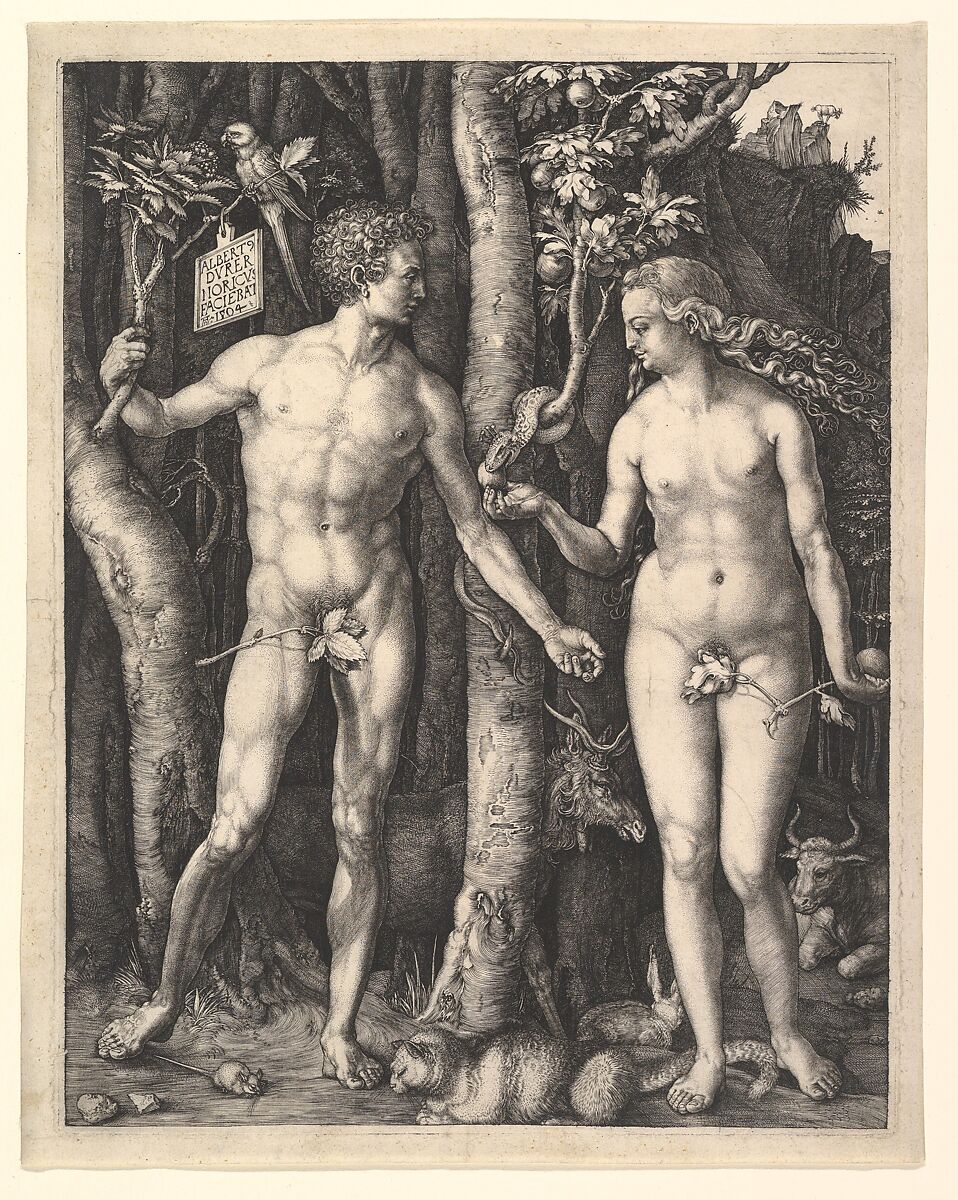
During the time of my original endeavor exploring the communicative potential of creating compound metaphorical figures, I was of course aware of the biblical associations attached to the tree of knowledge of good and evil, the—TOKOGAE figure. But not, as I was later to discover, or read into, the significance of the concept of governance for understanding this figure, what’s arguably rhetorically intended to be conveyed via the actions of Adam & Eve in the parable of the Eden Narrative. The connection between knowledge and governance involved in human affairs, represented by the tree of knowledge metaphor, remained in my consciousness over time only to eventually find another application. That is in mobilizing the symbolic metaphorical figure of TOKII, would it not, by yoking these two trees together across millennia, serve as an appropriate rhetorical vehicle, as a functional means, a sign, with which to grasp-indicate the essential dilemma between knowledge and governance now framing, now presented by emergent AI?